Human-AI
From AI Assistants to AI Accountability: Why Context Is the Missing Layer
2026-06-04
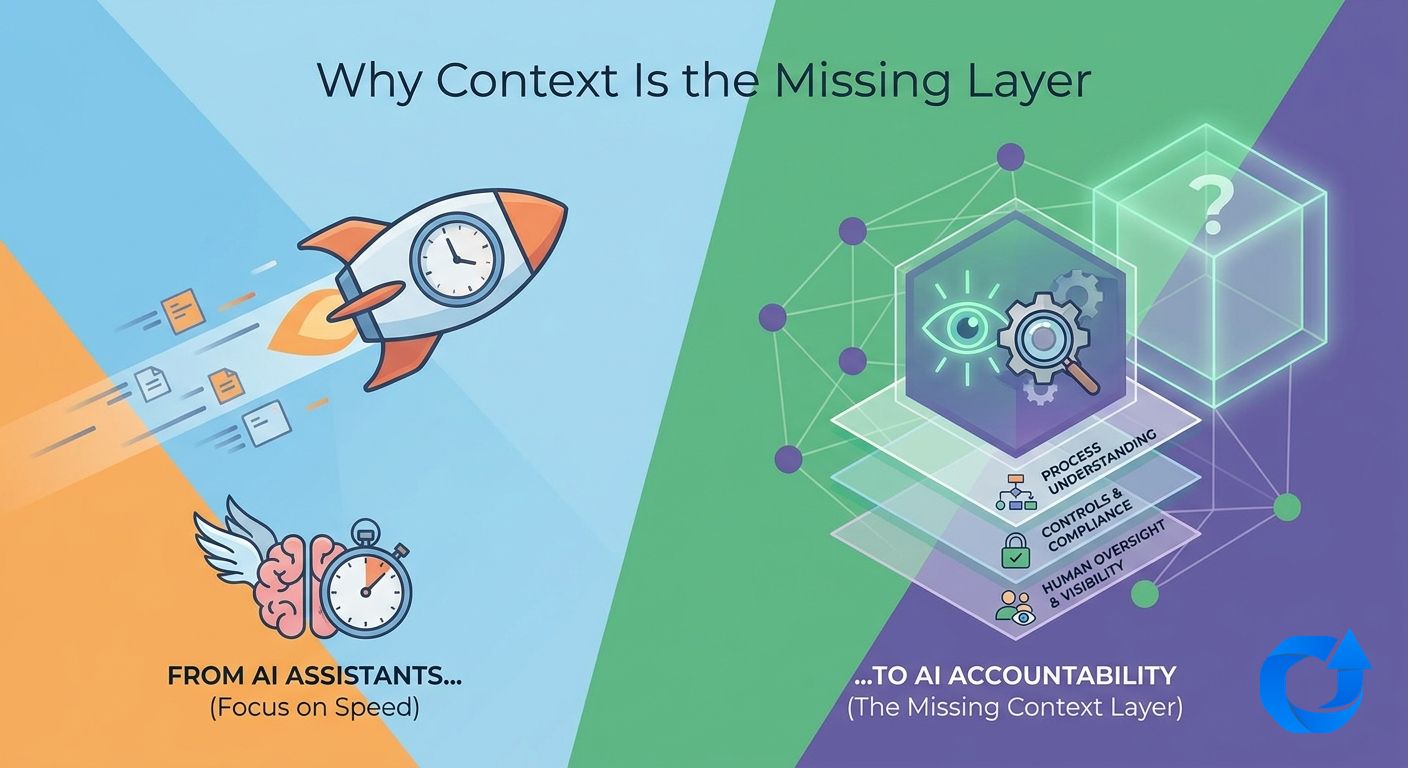
Most AI conversations focus on speed. Speed matters. But for reliable, secure and compliant systems, speed alone is not enough.
Human-AI systems need to align policy, rules, laws and regulations with the actual running system - that means bringing together groups such as risk management, security, compliance and devops teams to get them "on the same page".
That is the idea behind JarviSIM and JarviSWARM.
JarviSIM.ai focuses on the process side. It helps model how work should happen, where decisions occur, and where controls belong. For example, if a process touches sensitive health data, JarviSIM should identify where HIPAA or SOC 2 controls need to exist in the process design.
JarviSWARM (an open source framework & agent harness) focuses on the code and implementation side. It scans the application, reviews code paths, identifies business rules, and determines which controls the code appears to support or require.
The value comes from connecting the two: Enterprise process solutions work from the top down -- they define workflows, risks, approvals, and controls. Developers often work from the bottom up. They build the system, make technical decisions, and handle edge cases inside the code.
Those two worlds rarely stay aligned, and JarviSIM + JarviSWARM create a bridge between them.
The forward pass starts with the process. The system asks: “The process says these controls should exist. Does the code actually implement them?” The backward pass starts with the code. The system asks: “Based on what this application actually does, what controls should exist in the process?”
That creates a two-way conversation between business design and technical reality.
For compliance, this matters a lot. A team should never say, “The system is compliant,” without showing what controls exist, where they exist, and how they connect to the actual implementation.
The stronger approach is:
Process to control. Control to code. Code back to process.
That gives leaders, developers, auditors, and business owners a shared view of risk.
Reach out and tell us how you have used AI to automate full-cycle compliance!